

What Is Qi? A Beginners Guide to the Energy Behind TCM
If you've spent any time around Traditional Chinese Medicine, you've heard the word Qi.
It shows up everywhere — in acupuncture consultations, in herbal formulas, in the way TCM practitioners describe why you're tired, why you're tense, why your digestion is off. And yet for most people, it remains slightly out of reach. A concept that sounds meaningful but never quite resolves into something concrete.
This post is our attempt to change that.
Qi isn't mystical. It isn't vague. It's a precise, practical framework for understanding how your body produces, circulates, and expends energy — and what happens when that process is disrupted. Once you understand it, everything else in TCM starts to make sense.
The Honest Translation Problem
The word Qi (氣) is usually translated as vital energy or life force. Neither is quite right.
The character itself is instructive. It combines the symbol for rice — nourishment, substance — with the symbol for steam or vapour rising from it. Qi is something like the energy released through transformation. The warmth and activity that emerges when raw material becomes something usable.
In practice, Qi refers to everything that animates living systems. The breath moving through your lungs. The warmth your body generates. The force that moves blood through your vessels. The mental clarity that lets you hold a thought. All of these are expressions of Qi — not metaphors for it.
This is why translating it as energy falls short. Energy in the Western sense is a measurable quantity. Qi is more like a quality of aliveness — something you perceive in its effects rather than measure directly.
Where Qi Comes From
TCM identifies three primary sources of Qi, and understanding them changes how you think about energy in your own life.
The first is Prenatal Qi — also called Yuan Qi, or Original Essence. This is inherited from your parents at conception. It's stored in the Kidneys and functions as your foundational reserve — the deep vitality that underlies everything else. It's finite. It can be conserved or depleted, but it cannot be replaced.
The second is Food Qi — called Gu Qi. This is extracted from everything you eat and drink by the Spleen and Stomach. The quality of your diet, the warmth of what you consume, the health of your digestive system — all of these directly determine how much usable Qi you extract from food. This is why TCM places such emphasis on digestion. The gut isn't just processing food. It's manufacturing energy.
The third is Air Qi — drawn in through the breath by the Lungs. Combined with Food Qi in the chest, these two sources form what TCM calls Gathering Qi — the energy that powers respiration, circulation, and the voice.
These three sources work together continuously. Prenatal Qi is the foundation you were given. Food and Air Qi are what you build on top of it every day. How well you build — through nourishment, breath, rest, and balance — determines the energy available to you throughout your life.
The Different Types of Qi in the Body
Qi isn't one uniform substance that sits in a single place. It differentiates as it moves through the body, taking on different roles in different systems.
Nutritive Qi flows through the meridians and nourishes the organs and tissues. Defensive Qi circulates at the surface of the body, protecting against external pathogens — what Western medicine might recognise as immune function. Organ Qi refers to the specific vitality of each individual organ system — Lung Qi, Spleen Qi, Kidney Qi — each with its own character and function.
When TCM practitioners talk about Spleen Qi deficiency, they mean the Spleen's specific energy for transforming food into usable Qi has become insufficient. When they talk about Liver Qi stagnation, they mean the Liver's energy for smooth flow and circulation has become blocked. These aren't abstract diagnoses. They're functional descriptions of what's not working and why.
What Happens When Qi Is Disrupted
TCM understands illness and imbalance primarily through the lens of Qi — specifically through four patterns of disruption.
Deficiency is when there simply isn't enough Qi. The most common pattern in modern life. Symptoms include fatigue that rest doesn't fully resolve, pale complexion, weak digestion, low immunity, and a general sense of running below capacity. Causes include poor diet, overwork, chronic stress, insufficient sleep, and — importantly for Matter's audience — long-term stimulant use that draws on deep reserves without replenishing them.
Stagnation is when Qi is present but not moving freely. Often caused by emotional tension, stress, or a sedentary lifestyle. Symptoms include frustration, a feeling of being stuck, digestive bloating, tension headaches, and the particular exhaustion that comes from being mentally overactive but physically underused. Many people in demanding professional lives experience Qi stagnation without knowing it.
Sinking is when Qi that should be held upright loses its lifting function — associated with prolapse, chronic fatigue, and a heavy, dragging sensation.
Rebellion is when Qi moves in the wrong direction — upward when it should descend, as in nausea, acid reflux, or coughing.
Most people reading this will recognise deficiency and stagnation. They're the two patterns most associated with modern working life — doing too much on too little, for too long.
How TCM Supports Qi
This is where herbs, food, acupuncture, movement, and rest all connect.
In TCM, supporting Qi means addressing its sources and its flow simultaneously. Tonifying herbs — like Astragalus (Huang Qi), Codonopsis (Dang Shen), and Ginseng (Ren Shen) — strengthen the body's capacity to produce and hold Qi. Warming herbs support the digestive fire that converts food into energy. Moving herbs like rose and peppermint address stagnation, restoring flow where Qi has become blocked.
The principle is always the same: nourish the root, support the function, restore the balance. Not push the system. Not borrow from tomorrow. Build from within.
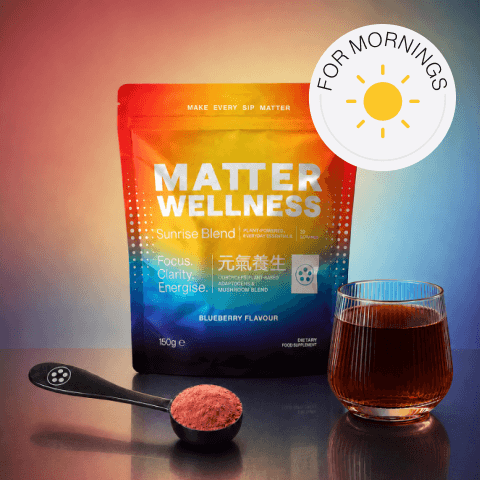
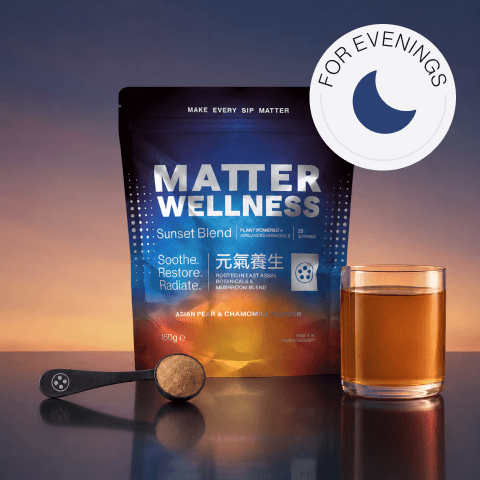
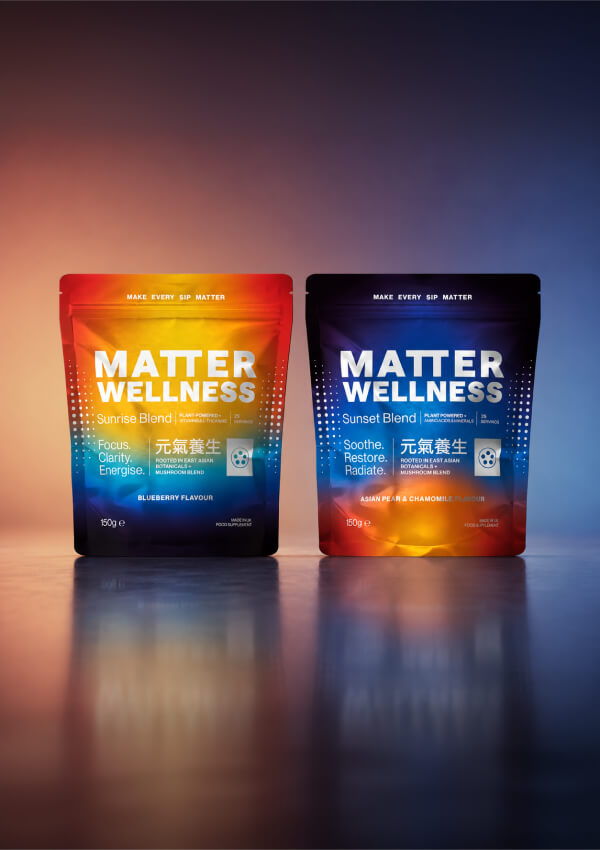
This is the philosophy that sits behind both Sunrise and Sunset. Not quick fixes. Not stimulants dressed up in wellness language. Formulas designed to support the systems through which your body generates its own energy — and finds its own rest.
Qi and the Modern Life
The honest observation is that most modern habits are at odds with how TCM understands Qi.
Chronic stress depletes Kidney Qi. Poor sleep fails to replenish what the day spent. Irregular, cold, or processed food weakens Spleen Qi and reduces the energy extracted from meals. Caffeine and stimulants draw on deep reserves to override the body's signals. Overwork and under-rest create the conditions for both deficiency and stagnation simultaneously.
None of this is a moral judgement. It's just an accurate description of what many people are living with — and why they feel the way they do.
TCM's value isn't in telling you what you're doing wrong. It's in offering a framework precise enough to understand what's actually happening, and a set of tools old enough to have been tested across generations.
Qi is where that framework starts.