


Morning vs. Evening Rituals: How TCM Aligns With Your Natural Clock
Modern life rarely respects rhythm. Deadlines stretch into the night, phones glow long after sunset, and the line between day and evening blurs. Yet both Traditional Chinese Medicine (TCM) and modern science insist on the same truth: our bodies are built on time.
In TCM, this timekeeping is expressed through the 24-hour organ clock, a cycle in which each organ system reaches its peak energy at specific hours of the day. In Western science, it is the circadian rhythm — the body’s internal clock, finely tuned by light, darkness, and habit. While the languages differ, the message is strikingly similar: when we align our rituals to the body’s natural flow, we thrive.
The TCM Organ Clock
The organ clock is both practical and poetic. Each two-hour window is governed by a particular organ system, guiding when we should rise, eat, rest, and reflect. For example:
-
5–7 a.m. | Large Intestine → The body wakes, eliminating waste and preparing for the day.
-
7–9 a.m. | Stomach → The best time to nourish yourself with a grounding breakfast.
-
9–11 a.m. | Spleen → Energy peaks, making it ideal for focused work.
-
1–3 p.m. | Small Intestine → Digestion and absorption are strongest.
-
5–7 p.m. | Kidneys → Time to restore vitality through gentle activity.
-
9–11 p.m. | Triple Burner → The body readies for rest, hormones balancing for deep sleep.
In this view, health is not just what we eat or how we move, but when.
The Circadian Rhythm
Modern biology offers its own map. Governed by the brain’s suprachiasmatic nucleus, our circadian rhythm is entrained by light and darkness. Cortisol rises in the morning to wake us; melatonin releases in the evening to ease us into sleep. Disruptions — jet lag, late-night screens, erratic schedules — ripple through digestion, immunity, even mood.
Though one speaks in qi and organ systems, the other in hormones and neurons, both agree: harmony comes from respecting time’s natural pulse.
Morning Rituals: Awakening with the Sun
Both TCM and circadian science agree that morning is for energy, focus, and clarity. This is when the Stomach and Spleen are most active, efficiently transforming nourishment into usable qi — or, in modern terms, converting fuel into sustained energy.
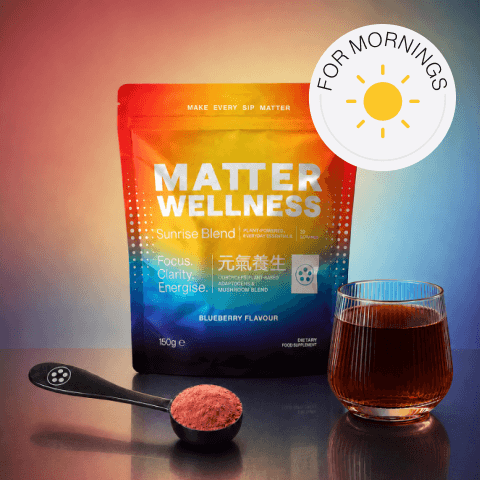
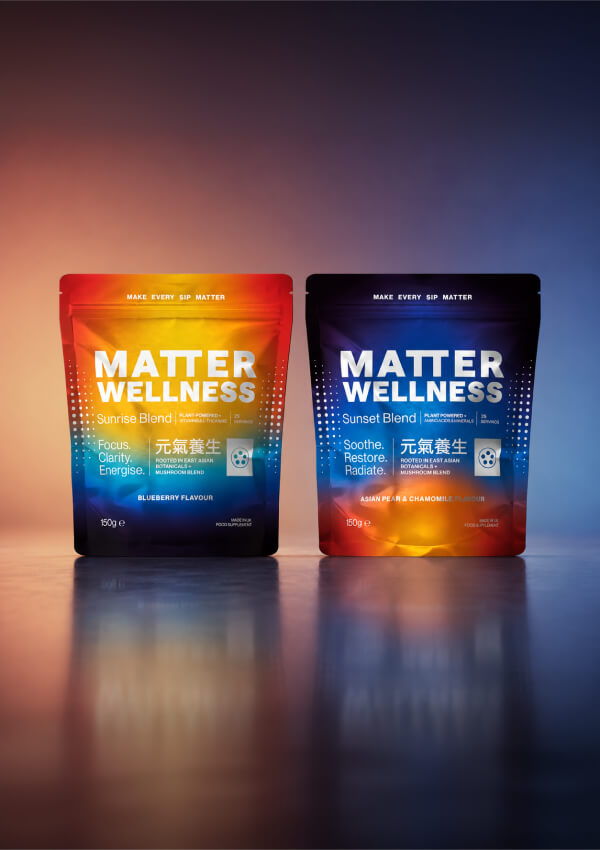
Our Sunrise Blend is designed to meet this moment. With adaptogenic mushrooms, TCM herbs, and micronutrients, it supports calm, sustainable energy rather than the sharp peaks and crashes of caffeine. It is tea-like in flavor — a grounding ritual that primes body and mind for the day ahead.
Evening Rituals: Restoring with the Moon
As the sun lowers, so should we. From 7–11 p.m., the organ clock tells us the body is consolidating, preparing for repair and rest. The circadian rhythm agrees: melatonin begins to rise, signaling the body to dim its activity.
This is the hour for winding down. Our Sunset Blend was created to honor this rhythm — a soothing mix of TCM-inspired botanicals and calming mushrooms with a gentle pear and chamomile aroma. It’s not about sedation, but about encouraging the body to soften into its natural cycle, where sleep can arrive without force.
Living With the Clock
What TCM reminds us — and what modern science now echoes — is that health isn’t only about what we do, but when. Morning rituals of focus, evening rituals of rest: these aren’t luxuries, but the body’s own instructions written across millennia.
In a culture that thrives on disruption, returning to rhythm may be the simplest form of medicine.